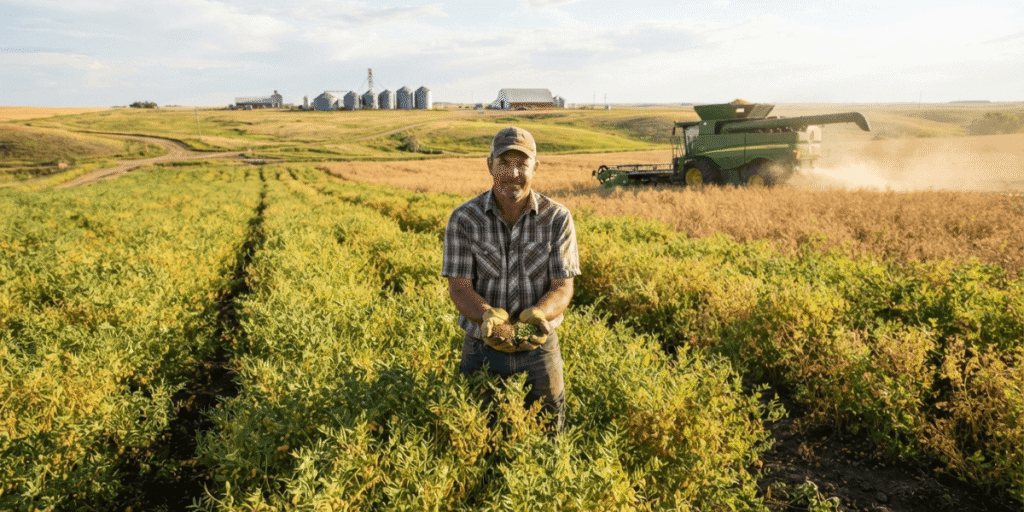
A quiet shift has taken place across the northern plains over the past decade. Land once dedicated almost entirely to wheat now grows lentils, dry peas, and chickpeas at a scale few other regions can match. Montana and North Dakota together account for most US pulse production, and food manufacturers sourcing at volume are taking notice. Favorable growing conditions, an organized grower base, and expanding processing infrastructure have turned this corner of the country into a genuine supply hub rather than a secondary source.
This guide examines why the region has earned that position and what it means for buyers planning a dependable, long-term pulse-supply strategy.
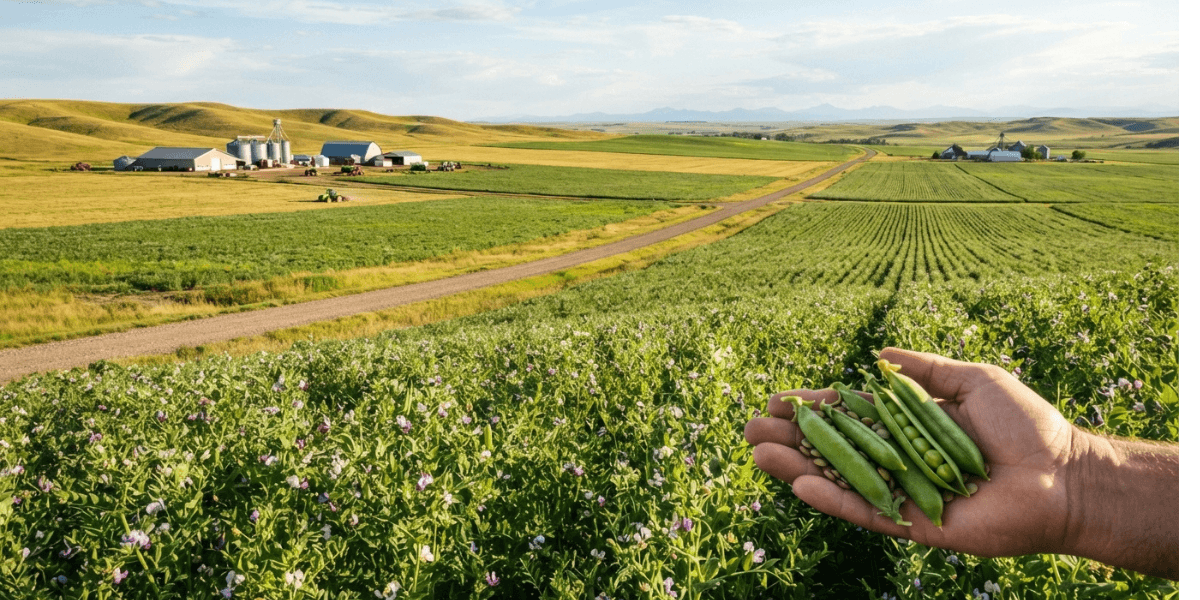
Montana and North Dakota are at the heart of US pulse production, particularly for dry peas and lentils. USDA data for 2025 show North Dakota produced about 9.19 million hundredweight of dry peas, while Montana produced 9.17 million. Montana also produced approximately 7.70 million hundredweight of lentils, compared with 2.85 million in North Dakota.
Their success comes from more than acreage. Pulses fit well into Northern Plains farming systems and can diversify crop rotations while helping reduce fertilizer nitrogen needs through biological nitrogen fixation.
Montana State University research identifies pulse crops as an important part of Montana’s dryland crop rotations. Its research shows that peas and lentils can diversify wheat-based systems, contribute nitrogen through biological fixation, and provide a nitrogen credit to following crops. MSU field trials also found that wheat yields following lentils were equal to or greater than yields following several other crops in multiple years.
Recent production data shows just how significant this region has become for pulse crops.
Montana lentil production has grown sharply in recent seasons, with planted acreage expanding well beyond historical averages. North Dakota also contributes meaningfully to national lentil output, giving the region a combined supply base that few other states can match.
Dry pea acreage has expanded across both states, with North Dakota posting strong year-over-year growth in recent harvest reports. Montana remains a consistent top producer, supported by favorable soil and rainfall patterns in the Golden Triangle and northeastern regions.
Chickpea production has increased significantly in Montana, driven by higher planted acreage and improved yields. The state now ranks as the leading US producer of chickpeas, supplying both domestic manufacturers and export markets.
Pulse crops now cover well over a million combined acres across Montana and North Dakota. This scale supports specialty crop sourcing in Montana for buyers who need consistent volume across multiple growing seasons, not a single harvest.
A meaningful share of the region’s pulse output moves into international trade, with strong demand from South Asia, the Middle East, and other markets that rely on lentils and chickpeas as dietary staples. This export activity supports specialty-crop supplier relationships in Montana that extend well beyond domestic food manufacturing.
Organizations representing thousands of pulse growers across Montana and North Dakota help coordinate planting decisions, quality standards, and market access, giving buyers a more organized supply base than fragmented regional sourcing.
| Metric | Montana | North Dakota |
| Leading pulse crops | Dry peas, lentils, chickpeas | Dry peas, lentils, chickpeas |
| 2025 dry pea production | 9.17 million cwt | 9.19 million cwt |
| 2025 lentil production | 7.70 million cwt | 2.85 million cwt |
| Production significance | #1 US producer of dry peas and lentils | Major US dry pea and lentil producer |
| Key production areas | Northeast and Triangle regions | Major Northern Plains production areas |
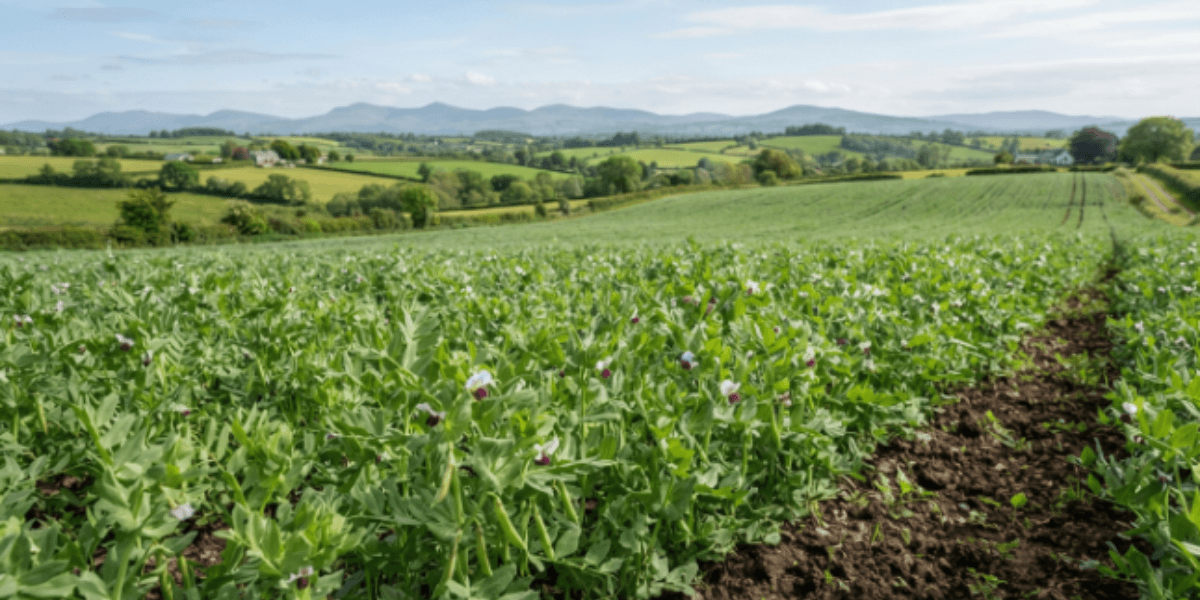
Pulses thrive in the cool, dry growing conditions found across the northern plains. Lentils and chickpeas require less water than many alternative crops, which suits the semi-arid climate found across much of Montana and North Dakota. The same equipment used for small grain farming, such as combines and seeders, works for pulse production with only minor adjustments, which lowers the barrier for farmers rotating into these crops.
A lentil processor in Montana that buyers in the USA rely on benefits from this concentration of growers, since a dense farming base within a single region shortens transport distances between the field and the facility. Shorter transport times help preserve crop quality and reduce handling costs before pulses reach processing and packaging operations.
Growing pulse crops is only part of the equation. The region has also built out infrastructure for cleaning, splitting, and packaging to support large-scale buyers. This combination of farmland and processing capacity enables the area to serve as a genuine pulse-crop hub that manufacturers in the USA can depend on for both raw and processed pulse products.
Facilities across the region handle cleaning, grading, dehulling, and bagging, which allows buyers to source finished, food-grade product rather than managing processing separately. This integrated approach reduces the number of parties involved between the farm and the final shipment, thereby supporting more consistent quality control. Working with an established pulse supplier in North Dakota, like American Harvest Group, gives manufacturers access to dry peas, lentils, and dry beans from one of the country’s most active pulse-growing regions.
Manufacturers evaluating this region as a sourcing base should weigh a few practical factors before committing to a long-term supply agreement.
Buyers focused specifically on chickpeas often look for a chickpea supplier in North Dakota with strong ties to Montana’s growing network, since the two states frequently work together on volume and logistics for larger contracts.
For food manufacturers, the concentration of pulse production in Montana and North Dakota can make sourcing more efficient and predictable. Access to established grower networks, regional processing facilities, and multiple pulse varieties gives buyers more options when planning large-volume ingredient programs.
The region also offers advantages in supply chain management. Sourcing pulses closer to domestic processing facilities can reduce unnecessary transportation and handling, while established relationships between growers, processors, and suppliers can support more consistent quality and availability. For manufacturers planning long-term production, these factors can make the Northern Plains a practical sourcing base for lentils, dry peas, chickpeas, and other pulse ingredients.
If you need help sourcing private-label beans and lentils in the USA, American Harvest Group has a Montana-based processing infrastructure that supports private-label packaging alongside bulk supply. Reach out to our team today to explore your options!
Favorable growing conditions, strong grower networks, and rising demand for plant protein have pushed Montana ahead of other states in lentil, dry pea, and chickpea production.
North Dakota is one of the top-producing states for dry peas, lentils, and dry beans, working alongside Montana to supply the majority of the country’s pulse crop output.
Both. A significant portion is exported to markets across South Asia and the Middle East, while the remainder is supplied to domestic food manufacturers.
Wheat remains a major rotation partner, along with canola in some areas. Pulses are often rotated with these crops to improve soil health.
Local processing reduces handling steps between the farm and the finished product, supporting better quality control and shorter lead times for manufacturers.
Montana and North Dakota have grown into the backbone of US pulse crop production, supported by favorable growing conditions, an organized grower base, and expanding processing infrastructure. For food manufacturers seeking a dependable, large-scale source of lentils, dry peas, and chickpeas, this region offers a level of consistency that is difficult to match elsewhere in the country.
Manufacturers looking for a dependable specialty crop supplier in North Dakota can turn to American Harvest Group for an already established farmer network and processing capacity to support consistent, large-scale pulse supply. Contact us today to discuss your sourcing needs!

Divyaa Dharga is a contributor at American Harvest Group, specializing in industrial hemp, sustainable agriculture, and emerging biomaterials. With a strong interest in regenerative farming practices and the evolving global hemp economy, she creates research-driven content that helps readers understand cultivation methods, supply chain developments, and innovative applications of hemp-based products. Through in-depth articles and industry insights, Divyaa Dharga supports American Harvest Group’s mission to promote environmentally responsible and economically viable hemp solutions.
