
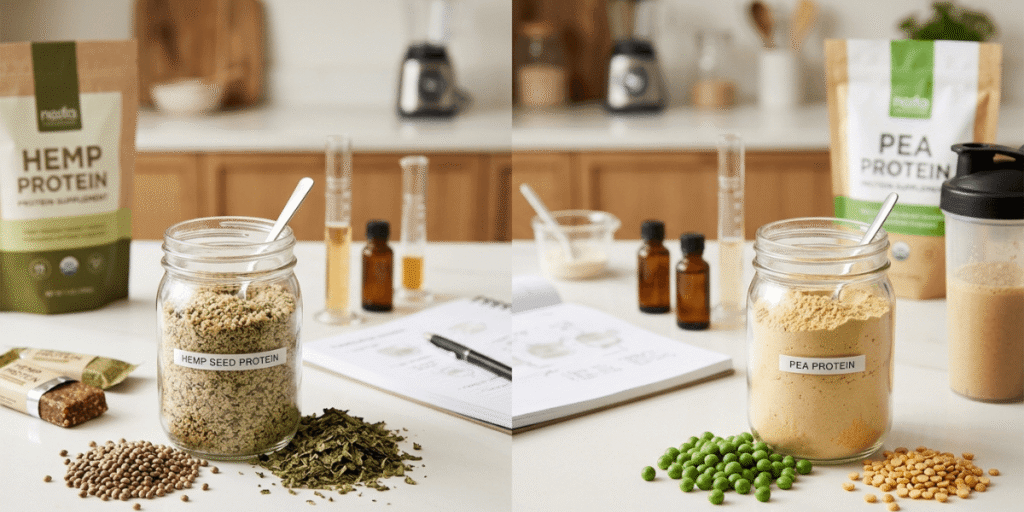
The plant-based protein market is growing fast, and formulators are under pressure to make smart ingredient choices. Two proteins keep coming up in almost every conversation: hemp seed protein and pea protein. Both come from plants, are clean-label friendly, and appear in plant-based protein blends across functional supplements.
But they are not the same. They have different nutritional profiles, different functional properties, and different use cases. This guide breaks down both so you can make the right call for your formulation.
Hemp seed protein is produced by grinding hemp seeds into a powder after most of the oil has been removed. It retains fiber, healthy fats, and a range of micronutrients, making it more than just a protein source.
The hemp protein nutritional profile includes all nine essential amino acids, dietary fiber, and omega-3 fatty acids. That combination makes it a genuinely useful ingredient for formulas where whole-food nutrition matters.
Protein concentration ranges from 50% to 70%, which depends on how much oil was removed during processing. That gap matters at the formulation level because it affects how much powder you need per serving.
These come from yellow split peas and are typically processed into an isolate or concentrate. Pea protein isolate delivers around 80-85% protein on a dry basis, making it one of the most protein-dense plant options on the market.
It does not contain gluten, dairy, or soy, making it a reliable choice for allergen-sensitive formulations. It also has a higher digestibility score than hemp, meaning the body absorbs and uses more of its amino acids per serving.
So how do these two actually stack up against each other? Let’s go through the key formulation factors.
Pea protein wins on protein density. A standard serving of pea protein isolate delivers around 24 to 26 grams of protein, while hemp protein typically provides 15 to 20 grams in the same serving size. For high-protein formulas targeting athletes or active consumers, that difference is significant.
This is where the difference gets more nuanced. Pea protein has higher leucine and lysine content, which supports muscle building. Hemp protein, on the other hand, has better methionine and cysteine levels: amino acids that pea protein lacks.
This is exactly why many formulators combine the two in plant-based protein blends to achieve a more complete amino acid profile.
Pea protein is easier for most people to digest and has a higher bioavailability score. Hemp protein has a moderate digestibility rate and a slightly earthy, nutty taste that can be harder to mask in formulations. That said, hemp’s fiber content supports gut health in a way that isolated pea protein does not.
Pea protein has superior gelling and emulsification properties, making it the preferred choice for ready-to-drink beverages, protein bars, and meat alternatives. Hemp protein works better as a secondary ingredient in blends, contributing amino acids and fiber without overpowering the formula.
American Harvest Group works with agricultural ingredients rooted in quality and sustainability. If your formulation calls for a reliable green lentil supplier in Montana or clean plant-based sourcing, our team understands what modern supplement brands need. Connect with us today!
If you are formulating for a clean label or organic market, organic hemp protein powder gives your product a real edge. Hemp naturally resists pests, requires less water than many other crops, and improves soil health through its root system.
Consumers reading labels today expect transparency. Organic certification signals that the ingredient was grown without synthetic pesticides or fertilizers, which aligns well with wellness-focused supplement positioning.
Hemp protein supply is growing across North America and Europe. When sourcing it, always verify the protein concentration tier. A lower concentration of hemp powder behaves very differently in formulation than a higher concentration, and that difference shows up directly in your finished product.
Hemp seed protein has become much easier to work with on the regulatory side. As long as it comes from a verified supplier, adding it to a functional supplement formula is straightforward today.
The right choice depends on what your supplement is trying to do.
Your formula is muscle-focused or going into a ready-to-drink format. Pea protein’s higher leucine content, better digestibility, and strong functional properties make it the primary workhorse in most performance supplements.
Your formula targets gut health, general wellness, or a whole-food positioning. Rich in fiber, omega-3 fatty acids, and complete protein, hemp enhances the nutritional value of wellness powders and meal-replacement products.
You want the best of both. Combining pea and hemp protein covers the amino acid gaps each one has individually, delivering a more complete nutritional profile while keeping your formula plant-based and clean label.
The hemp protein vs pea protein debate does not have a single winner; it has a right answer for each formulation goal. Pea protein leads to protein density and digestibility. Hemp seed protein brings fiber, healthy fats, and a broader nutritional picture. Understanding what each ingredient contributes is what separates a good supplement from a great one.
With over 4,000 farmers in our global network, American Harvest Group understands agricultural sourcing at scale. If your formulation needs a trusted partner for private-label beans and lentils in the USA, we have the infrastructure to support it. Get in touch with our team today!

Divyaa Dharga is a contributor at American Harvest Group, specializing in industrial hemp, sustainable agriculture, and emerging biomaterials. With a strong interest in regenerative farming practices and the evolving global hemp economy, she creates research-driven content that helps readers understand cultivation methods, supply chain developments, and innovative applications of hemp-based products. Through in-depth articles and industry insights, Divyaa Dharga supports American Harvest Group’s mission to promote environmentally responsible and economically viable hemp solutions.
