
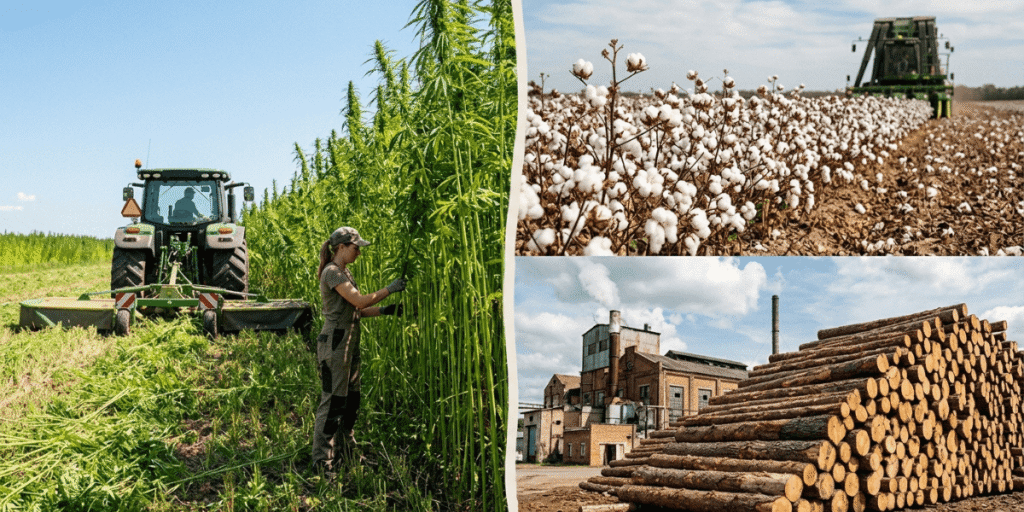
Industrial manufacturers are placing greater emphasis on material selection than ever before. Rising production costs, sustainability goals, supply chain challenges, and changing customer expectations have encouraged businesses to look beyond traditional raw materials and evaluate alternatives that can support long-term operational efficiency.
Industrial hemp has emerged as one of those alternatives. Once viewed primarily as an agricultural crop, hemp is now used across multiple industries, including construction, textiles, packaging, biocomposites, automotive manufacturing, paper production, and consumer goods. While initial material pricing often receives the most attention, a complete evaluation requires a broader perspective.
Total cost of ownership considers the full financial impact of a material throughout its lifecycle, including sourcing, transportation, processing, storage, waste management, and long-term operational performance. Understanding these factors can help manufacturers make more informed decisions when comparing industrial hemp to conventional materials.
Industrial hemp is a fast-growing crop cultivated for its fiber, hurd, seeds, and other industrial uses. Modern processing methods allow hemp-derived materials to serve as alternatives to wood, plastics, synthetic fibers, and other conventional inputs.
Manufacturers seek materials that can support both performance and sustainability objectives. Some common applications of industrial hemp include:
Traditional raw materials continue to play a major role in industrial production. These materials often include:
Manufacturers today face increasing pressure to balance profitability, operational efficiency, and sustainability objectives. As a result, material selection has become a more strategic business decision that extends beyond simple cost comparisons. The materials chosen for production can influence manufacturing expenses, supply chain performance, environmental initiatives, product development strategies, risk management planning, and customer expectations.
Companies that assess materials through a broader operational lens are often better positioned to support long-term business goals while adapting to changing market demands. For businesses seeking dependable agricultural sourcing, American Harvest Group serves as a trusted bulk chickpeas exporter in the USA, helping manufacturers secure a reliable ingredient supply to support long-term operational planning. Get in touch with us to learn more!
A meaningful comparison requires looking beyond purchase price alone. Several factors contribute to total ownership costs over time.
Traditional materials often benefit from large-scale production systems that can reduce unit costs. Plastics, synthetic fibers, and wood products are widely available through established distribution networks.
Industrial hemp may carry higher upfront costs in certain markets due to processing capacity limitations and developing supply networks. However, the purchase price represents only one portion of the overall ownership costs. As hemp production continues expanding, pricing structures may become increasingly competitive.
Manufacturing efficiency plays a major role in total ownership calculations. Many traditional materials require extensive chemical processing, energy-intensive production methods, or complex manufacturing procedures before becoming usable products.
Industrial hemp processing can vary depending on the intended application. In some sectors, hemp-based materials may reduce processing complexity by providing natural characteristics that require fewer modifications. Companies should evaluate processing requirements alongside material costs rather than treating them as separate considerations.
Transportation expenses influence overall ownership costs across all industries. Traditional materials often move through extensive global networks before reaching production facilities. Long transportation routes can increase freight expenses and introduce supply chain risks.
The industrial hemp supply chain is continuously developing and expanding within North America, creating opportunities for regional sourcing strategies that may reduce transportation distances and improve supply visibility. Logistics efficiency remains an important consideration when evaluating total cost performance.
Storage requirements can affect operational expenses over time. Some traditional materials require specialized storage environments, protective handling procedures, or inventory controls to maintain quality.
Industrial hemp materials also require proper storage practices, but certain hemp-based products may offer advantages related to handling and warehousing depending on the application. Manufacturers should evaluate inventory management costs alongside material acquisition expenses.
Waste management has become a growing financial consideration for industrial operations. Traditional materials, particularly petroleum-derived products, may create disposal challenges and associated costs throughout their lifecycle.
Many organizations are evaluating hemp as one of several eco-friendly raw materials because of its renewable agricultural origin and potential to support waste reduction goals. Lower disposal costs can contribute to overall ownership savings over time.
Regulatory expectations continue evolving across manufacturing industries. Companies increasingly monitor emissions, resource consumption, waste generation, and sustainability performance.
Materials that support environmental objectives may reduce compliance burdens and strengthen reporting initiatives. Hemp’s renewable nature often aligns with broader sustainability programs that many organizations are implementing. These factors can influence long-term ownership costs beyond direct production expenses.
Reliable sourcing remains essential for operational continuity. Traditional materials benefit from mature supply networks, but global disruptions have demonstrated that established systems can still experience volatility.
Supply diversification has become a priority for many manufacturers seeking greater resilience. Organizations evaluating alternative materials often consider sourcing flexibility, regional availability, and long-term supply stability as part of ownership calculations.
Sustainability considerations increasingly influence purchasing decisions and investment strategies. Many businesses are actively seeking sustainable manufacturing materials that support operational goals while addressing environmental expectations.
Although sustainability benefits may not always appear directly on purchasing invoices, they can influence customer perception, regulatory readiness, investor confidence, and future business opportunities. These factors contribute meaningful value within a total ownership framework.
Looking beyond purchase price is essential when comparing industrial hemp and traditional raw materials. A narrow focus on initial pricing can overlook significant operational expenses that accumulate throughout a material’s lifecycle. Total cost of ownership provides a broader perspective by considering factors such as material acquisition, processing costs, transportation expenses, storage requirements, waste management, compliance obligations, supply chain reliability, and long-term sustainability impacts. Taking all of these elements into account allows manufacturers to evaluate materials based on their overall contribution to business performance rather than focusing solely on upfront purchasing costs.
Industrial hemp and traditional raw materials each offer distinct advantages depending on manufacturing goals, operational requirements, and supply chain strategies. While conventional materials continue to benefit from established infrastructure and broad availability, industrial hemp presents opportunities related to renewability, sustainability, and evolving industrial applications. A total cost of ownership approach provides a more complete picture of long-term value by considering the full lifecycle impact of each material rather than focusing solely on initial purchase price.
For businesses seeking dependable sourcing solutions, contact American Harvest Group today. Our small retail packaging company in the USA supports manufacturers through reliable supply networks.

Divyaa Dharga is a contributor at American Harvest Group, specializing in industrial hemp, sustainable agriculture, and emerging biomaterials. With a strong interest in regenerative farming practices and the evolving global hemp economy, she creates research-driven content that helps readers understand cultivation methods, supply chain developments, and innovative applications of hemp-based products. Through in-depth articles and industry insights, Divyaa Dharga supports American Harvest Group’s mission to promote environmentally responsible and economically viable hemp solutions.
